

How to Document Storm Damage on Your Roof: A Photo Checklist for Spokane Homeowners
The short answer
Photograph the damage before you clean it up, tarp it, or let a contractor touch it. Then keep the photos, the receipts, and your notes in one place with dates on them.
Adjusters settle claims on evidence. A strong claim is not the one with the saddest story, it is the one where every damaged item is documented, dated, and matched to a weather event that actually happened.
This page is only about documentation. For the wider process, from filing to adjuster visit to getting paid, see our page on roof insurance claims.
Why photos decide the outcome
After a windstorm crosses Spokane Valley, an adjuster may look at forty roofs in a week. They cannot tell from memory which ones lost shingles to that storm and which ones were already worn out.
Your photos do that. They show:
- That the damage is new and consistent with the event.
- That it is spread over the roof, not just one old worn spot everybody already knew about.
- That the roof was in reasonable condition beforehand, if you have earlier pictures.
- That nothing was disturbed or hidden before inspection.
A claim with a clean photo set moves faster than one where the roof was tarped and swept before anyone picked up a camera.
Start with the wide shots
Close-ups of damage mean nothing without context. Before you go near the damage, shoot the whole picture.
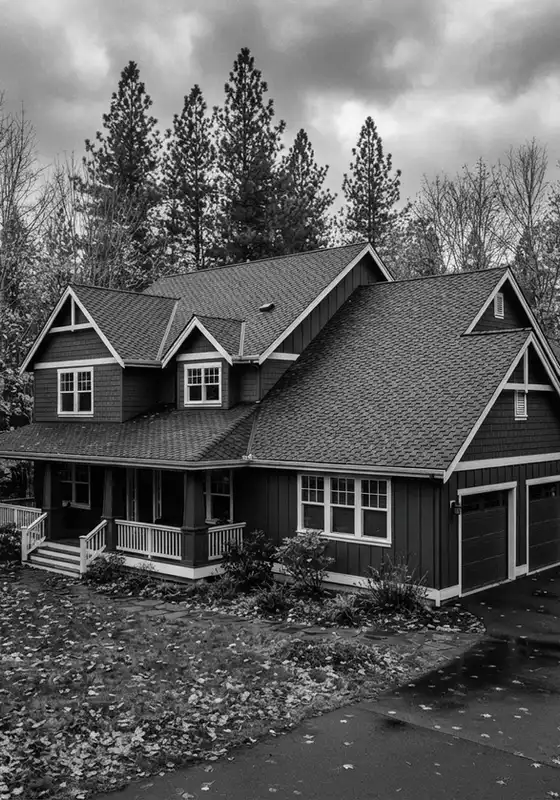
- The front of the house from across the street, so the address is obvious and the whole roof plane is visible.
- Each side of the house, one photo per elevation, roof to ground.
- Wide shots of any damaged slope before you touch it, with enough of the roof in frame to see where on the roof you are standing.
- The yard and driveway if anything came off the roof. Shingles and granules on the ground are strong evidence.
Take them in daylight with your phone's normal camera app, not a filtered one. Location and timestamp metadata matter, so leave that on.
The close-up checklist
Shingles
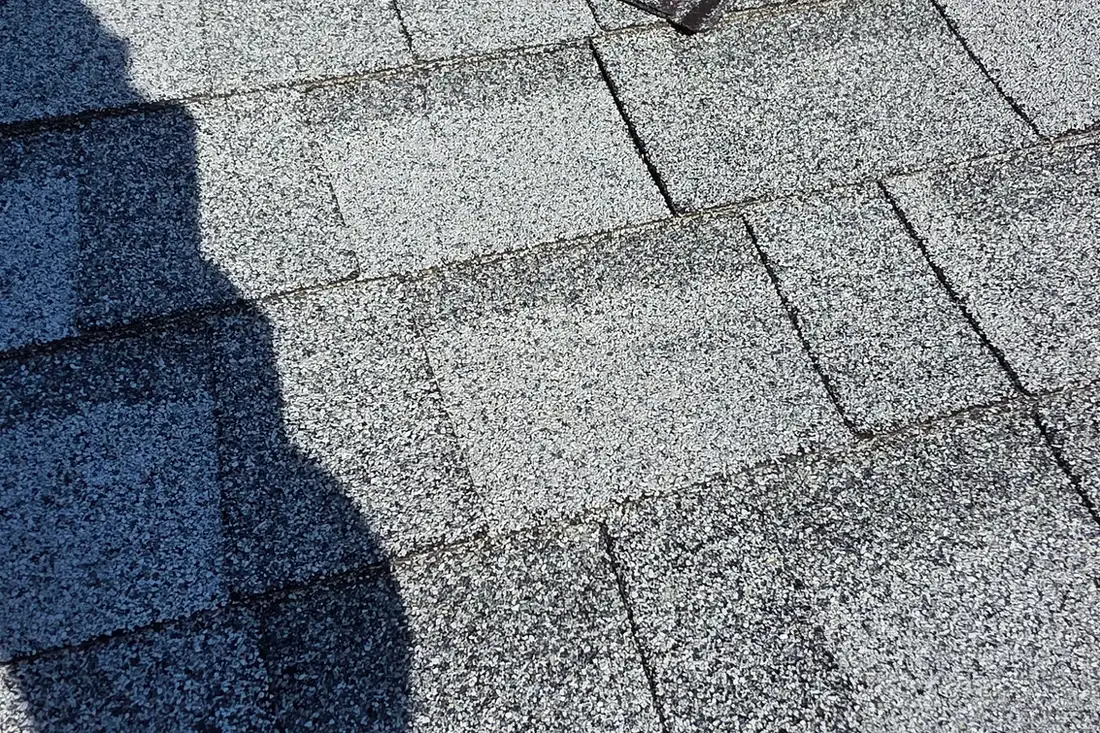
- Missing or torn tabs, with a few inches of the surrounding shingles in frame so the scale is clear.
- Creased or lifted shingles, which are the fingerprint of wind rather than age.
- Bare patches where the granules are gone, photographed dry so you can actually see the difference.
- Shingle edges that are bent upward instead of lying flat.
Hail evidence
Hail is the one most often disputed, because a soft metal mark is not always obvious on an asphalt roof. Photograph the things hail marks clearly and permanently:
- Metal roof vents, ridge caps, gutter aprons and downspout tops. Dents in metal are the clearest hail record a house has.
- Gutter faces, where you can see dent patterns.
- Granules in the gutters and at the bottom of downspouts, photographed where they collected. Do not sweep them up first.
- Any cracked or bruised shingle, shot close and in shade so the bruise actually shows.
Water and interior damage
- Ceiling stains shot head-on, plus a second photo that includes a wall or window so the room is identifiable.
- A tape measure across the stain if it is large. It gives the adjuster a size without a site visit.
- Peeling paint, bubbling drywall, or a wet patch at the top of a wall.
- Anything you had to move out of the way, photographed where it was damaged.
Everything else the storm touched
- Dented or detached gutters and downspouts.
- Bent flashing, chimney caps, and skylight frames.
- Branches or debris still on the roof, before you remove them.
- Fence panels, sheds or detached garages, if they are part of the claim.
Make the photos usable
Five habits separate a photo set an adjuster can work with from a folder of blurry close-ups:
- Shoot in daylight and no flash. Flash flattens the texture you are trying to prove.
- Give everything something to scale against. A hand, a shoe, a tape measure, or a shingle tab.
- Do not disturb the damage. No sweeping, no pulling off loose shingles, no piling debris.
- Walk the perimeter and narrate a video. A two-minute narrated walk from the ground is often more useful than forty stills, especially for water paths.
- Name the files or sort them by room and slope, so you are not scrolling through 200 images during a phone call with your agent.
What to save alongside the photos
- The date and time of the storm, and roughly how long it lasted.
- Any weather report, news clip, or neighbour's video confirming wind speed or hail size in your area. Hail size matters a lot, so note it: pea, marble, golf ball.
- Receipts for tarps, plastic sheeting, fans, dehumidifiers, or a night in a hotel if the house was not livable.
- The written inspection report from whoever looked at your roof.
- Every email, text and estimate exchanged with your insurer and your contractor. Save them as you go, not at the end.
Common mistakes that shrink a claim
- Cleaning up before photographing. The most expensive mistake on this list, and the most common.
- Throwing away damaged materials. If shingles come off, keep a piece until the claim is closed.
- Letting one contractor's photos be your only record. A roofer's photos are useful evidence, but they are not a neutral record. Keep your own set.
- Waiting weeks to report it. Policies have notice requirements, and delay gives an insurer room to argue the damage came from something else.
- Filing several small claims over one storm. One documented event, one claim, is far easier to get paid.
- Doing permanent repairs before the adjuster sees the roof. Temporary protection is expected and should be photographed and receipted. Permanent replacement is not.
If the roof is open to the weather, protect it first and photograph it while you are doing it. A dry house beats a perfect claim every time.
When to get a professional inspection
You can see missing shingles from the ground. You cannot see lifted edges in a valley, cracked pipe boots, or granule loss on a slope facing away from the driveway. Those are the things that decide whether a repair is enough or the claim needs to cover a replacement.
We inspect roofs across Spokane, Spokane Valley, Coeur d'Alene and North Idaho at no charge, take our own photo set, and give you a written scope you can send straight to your adjuster. If your roof is actively leaking, that is an emergency call, not an inspection booking.
Questions we get after storms
Should I file a claim at all?
If the damage is limited to a handful of shingles, you may be better off paying for a repair. Filing a claim that pays less than your deductible costs you a claims history for nothing. Get an inspection number first, then decide with your agent.
Do I have to use the contractor my insurer recommends?
In Washington and Idaho, no. You choose the contractor. Your insurer may have a preferred network, and you are not required to use it.
How long do I have to file?
It varies by policy and by state, and it is shorter than most people expect. Check your declarations page or call your agent in the first week. Do not assume you have a year.
Can I take the photos from the ground?
Please do, for anything you can reach. Do not climb onto a storm-damaged, wet roof. That is exactly how people get hurt, and the photos are not worth it.
If a storm just went through your neighbourhood, send us a message or call (509) 404-4444. We will look at the roof, document what we find, and tell you whether it is a repair or a claim.
Want a roofer to look at it in person?
ALPHA LLC inspects roofs across Spokane Valley, Spokane and North Idaho. The inspection and the written estimate are free.